
Introduction
The Central Coast of NSW is entering a pivotal growth phase. With population growth continuing to outpace expectations and renewed investment flowing into the region, infrastructure will become a decisive factor in shaping commercial property demand and values. For investors, understanding which projects are moving forward—and what they mean for the market—is essential to positioning assets for future growth.
According to the ABS, the Central Coast population is projected to grow by more than 50,000 people by 2041, adding demand across housing, retail, industrial, and health services. To support this, Council and regional partners have outlined a roadmap of enabling projects designed to unlock development capacity and create new employment hubs.
This blog explores the key infrastructure initiatives to watch and the opportunities they may create for commercial property owners and investors.
Strategic Infrastructure Priorities
Central Coast Key Enabling Projects (Council, 2024)
In November 2024, Central Coast Council identified a suite of “Key Enabling Projects” across housing, employment, transport, recreation, tourism, and environmental priorities. These projects include upgrades to water and sewer services in growth areas such as Gosford and Warnervale, and improved road connections to support both residential and employment precincts.
RDACC’s 2025–2030 Infrastructure Priorities
Regional Development Australia Central Coast (RDACC) has outlined 13 critical projects aimed at creating 30,000 new jobs and accommodating strong population growth. Transport connectivity, industrial land servicing, and precinct development feature prominently highlighting a coordinated push to match infrastructure to the region’s economic ambitions.
Central Coast Infrastructure Investment Guide 2025–2030
This guide, backed by business and industry bodies, highlights key transport and servicing upgrades. Projects of note include:
+ Pacific Highway intersection improvements
+ Warnervale–Wyong Link Road
+ Sparks Road intersection enhancements
+ Gosford Station masterplan
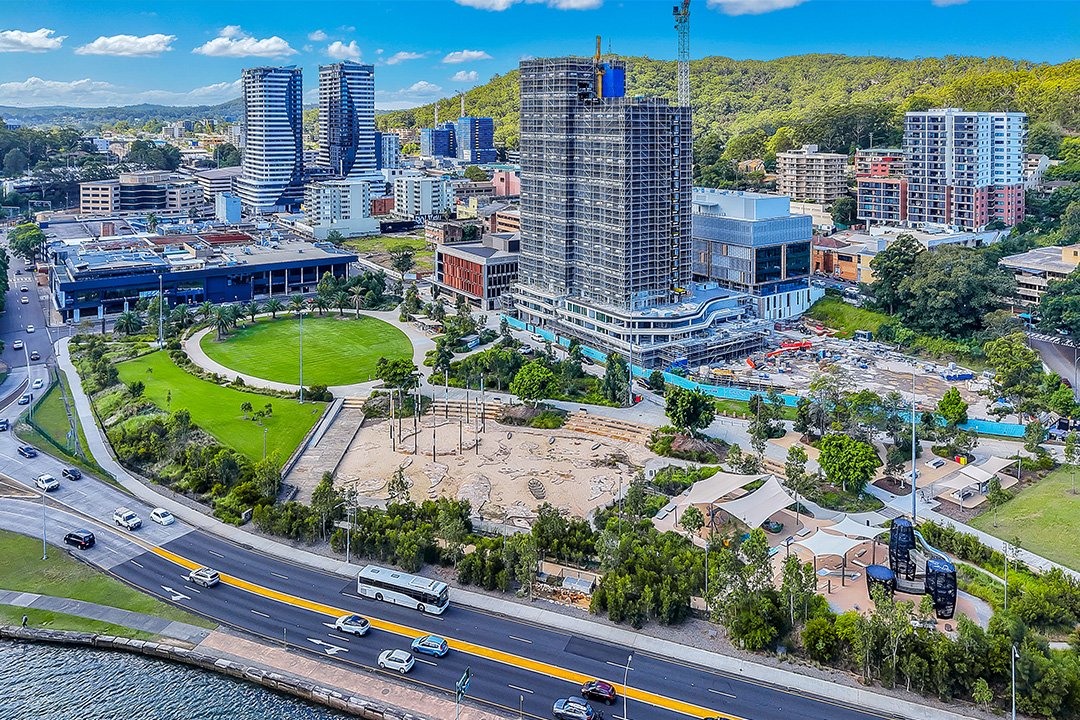
+ Longer-term: Central Coast Airport redevelopment and Gosford waterfront precinct revitalisation
Council-Delivered Foundations for Growth
Central Coast Council is actively investing in core infrastructure that will underpin development:
+ Water & Sewer Upgrades: Significant works are underway in Gosford to enable large-scale commercial and residential development.
+ Mardi Water Treatment Plant Expansion: An $82.5m upgrade is expanding capacity for population and business growth.
+ Road Renewals: Over $400m is committed to road upgrades, with a $20m injection across four years to improve connectivity and safety.
These works create immediate opportunities for property investors in newly serviced areas, particularly in industrial and mixed-use zones.
Energy Infrastructure: Powering Tomorrow’s Growth
The Hunter–Central Coast region is also benefiting from state-led energy projects, including:
• Renewable Energy Zone (REZ) with 1 GW of new generation capacity
• Hunter Transmission Project
• Waratah Super Battery
These projects enhance the region’s energy security, making it more attractive to logistics, manufacturing, and advanced industrial tenants who require resilient energy infrastructure. For investors, this provides a competitive edge in marketing properties to high-demand sectors.
Linking Infrastructure to Commercial Property Opportunities
Infrastructure projects create value by unlocking land, improving accessibility, and reducing operational risks for tenants. For Central Coast investors, the impacts are clear:
+ Project Type – Property Market Impact
+ Water & Sewer Upgrades – Unlocks new land supply for commercial and mixed-use development
+ Road & Transport Enhancements – Increases catchment areas for retail and office markets; supports industrial freight
+ Gosford Station Masterplan – Creates a high-footfall hub for retail and service businesses
+ Energy Infrastructure – Attracts tenants requiring strong energy reliability (industrial, logistics)
+ Airport & Waterfront Precincts – Positions region for tourism, creative industries, and hospitality growth.
Market Outlook: Positioning for Growth
Commercial property sentiment is gradually improving in NSW, with investor appetite returning to well-serviced growth corridors. In the Central Coast, industrial remains the standout sector, with tight vacancy rates in Somersby and Tuggerah, supported by robust demand from logistics and manufacturing occupiers. Office demand is more nuanced but expected to benefit from infrastructure-led revitalisation in Gosford, particularly around the station precinct.
Retail remains anchored by neighbourhood centres, which perform well in high-growth suburbs. Infrastructure-led improvements to roads and catchments will further underpin these assets.
For investors, the key is aligning acquisitions or leasing strategies with the infrastructure pipeline. Assets positioned near major upgrades—such as transport nodes, energy projects, or newly serviced land—are more likely to enjoy demand resilience and capital growth.
Conclusion
The Central Coast’s infrastructure pipeline is not just about roads and pipes—it is about shaping the region’s economic future. With population growth accelerating and government investment flowing into enabling projects, the opportunities for commercial property investors are significant.
Those who understand where the infrastructure spend is happening—and position assets accordingly—will be best placed to capture the upside in NSW’s next growth corridor.